
The MASTERY project works on launching the pilot phase at its fifth meeting
CETEM asistió en Pisa a la quinta reunión del proyecto, en la que los socios de MASTERY trabajaron en el desarrollo de una metodología de política de microcredenciales verdes
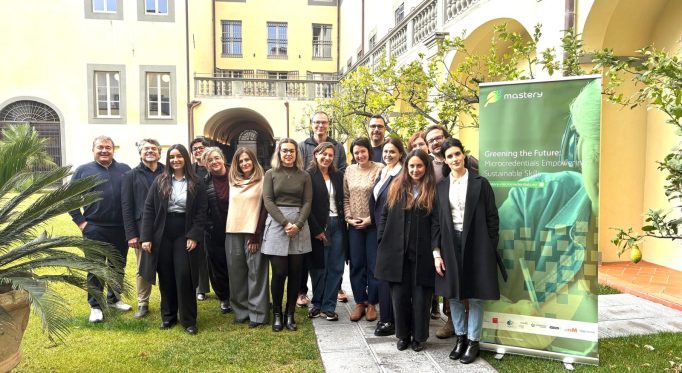
Last January, the Scuola Superiore Sant’Anna hosted the fifth meeting of the MASTERY project (Micro credentiAlS reliabiliTy unlEashing gReen economY) in Pisa, Italy. The initiative focuses on the development of micro-credentials, short digital certifications to respond to the needs for professional updating and retraining in the agri-food, construction, wood and furniture, and manufacturing sectors, especially in the field of green skills.
During the meeting, the consortium partners addressed various aspects related to the monitoring and progress of the project, including the key lines for the launch of the online platform and the pilot phase of the project to be implemented in all the consortium countries. During this stage, the partners will test a set of short training courses at levels 5-6 of the MEC, linked to the 12 green skills of MASTERY, in which vocational training students, professionals, workers and entrepreneurs from Italy, Spain, Finland, Belgium and Bulgaria will participate.
The pilot activities combine online learning through the MASTERY platform with face-to-face training sessions organised at national level, which will allow partners to adapt the delivery of the courses to local contexts, while following a common European framework.
This phase represents a key step in validating the relevance, quality and applicability of training pathways and micro-credentials and will continue until July. CETEM will be responsible for piloting two courses of particular relevance to the furniture sector:
– GS4: Cradle-to-cradle design
– GS5: Reducing waste and material production
After successfully participating and completing the assessment, students will obtain micro-credentials in accordance with the MASTERY policy methodology. This system will support evidence-based assessment and ensure transparency, traceability and recognition of learning outcomes. Another important point of the meeting was the planning of various workshops with professionals, students, teachers, and political representatives from each country, the results of which will serve as the basis for the development of guidelines and policy recommendations aligned with MASTERY’s strategy and objectives.
With this fifth transnational meeting, the project is making steady progress towards its objectives, continuing with the design of pilot courses and the organisation of workshops with professionals, students, teachers and political representatives, the results of which will serve as the basis for the development of guidelines and policy recommendations aligned with the strategy and objectives of MASTERY.
Find out more about the MASTERY projecty.
Compartir post:
Noticias relacionadas
CETEM participates in Ljubljana in the launch of the European BIOWISE project
The European MAYA project gives cancer survivors a voice in its first Spanish pilot workshop